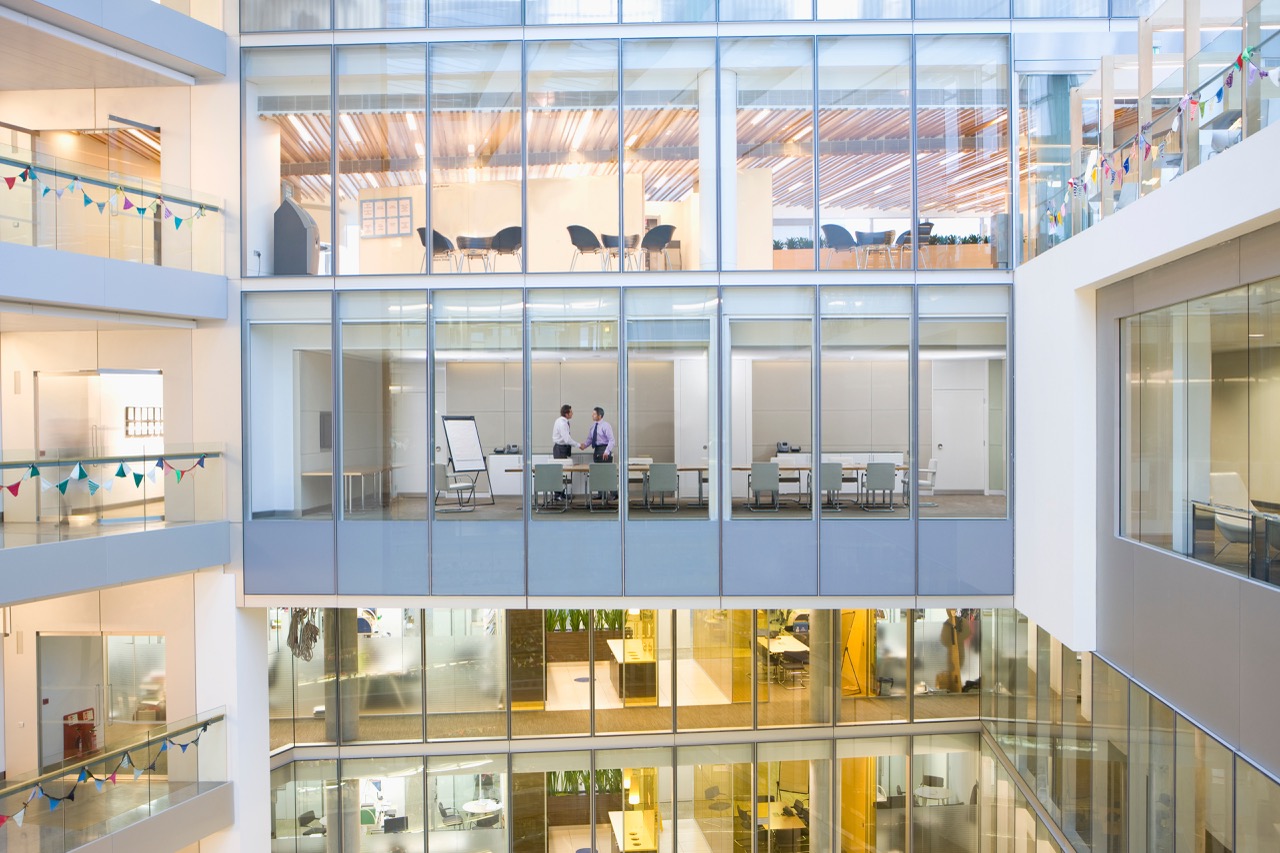
Demand for office space in the commercial real estate industry has again become noticeably quiet. The decline is so prominent that GlobeSt.com reports that demand is at its lowest rate since the first quarter of 2021. Nationally, the need for offices is down 30% by some estimates. With this lull and the follow-on excess inventory, it would seem that all the space could be put to a profitable alternative use.
To capitalize on the office space glut, some investors have devoted their resources to re-purposing inventory into food distribution centers, storage spaces, boutique gyms, classrooms for micro-schools, and co-working spaces. Miami-based startup Silofit, for instance, has profitably turned one-time cubicle space into a network of micro-gyms.
What About Healthcare?
In light of our current pandemic, intra-country migrations, and an aging population, it’s easy to think that an abundance of office space can be profitably turned into medical office space. After all, for at least half a decade, medical office space has weathered all sorts of encumbrances and become a safe harbor for investors. So, why not turn office space into medical space?
It’s been said that “All that glitters is not gold.” The aphorism, derived from a line in William Shakespeare’s play The Merchant of Venice, has been expressed in various ways since the 12th century. While the Bard gave us the most popular form of the saying, influential entities from Chaucer to Led Zeppelin have twisted the phrase to suit their contexts. The cautionary verse may also hold meaning for investors considering converting office space into space for healthcare professionals.
Typically, healthcare practitioners are good “bets” as tenants. The cost of setting up the office, developing clients or patients, and establishing their brand within a community means that MDs, radiologists, chiropractors, and optometrists will not quickly vacate a space once they’ve set up shop. For the building owner and investors, that means longer leases and revenue predictability, the holy grail for leasing space.
Allured by the perceived upside benefits, many building owners and investors are running toward the opportunity to convert their under-utilized office spaces to medical office space. In theory, these conversions make sense, but they may kill profitability in practice.
Inherent Complexity
It would be nice if converting existing office space to medical office space was as simple as changing the buildout. In theory, it would be a matter of adding some consultation spaces, setting up reception and waiting areas, and maybe a few other areas for clinicians and staff. In reality, converting existing space, by and large, requires significantly more effort.
Converting existing structures into a medical facility usually requires strategic planning and consideration of structural elements. Slab-to-slab heights, lead lining of walls, floor loads, and the like are all considerations in office space conversions. As Healthcare Construction+Operation News puts it, “Even the most raucous of office parties can’t shake the ceilings of a building the way an MRI machine or ultrasound device can.” That kind of vibration means serious structural reinforcement is required.
In addition to those elements, health professionals seeking medical real estate have to consider zoning, location factors, and healthcare-specific legislation. In Tampa, according to city code, “The minimum size zoning lot for a medical office shall be ten thousand (10,000) square feet in area.” Similarly, parking for medical office space also comes with strict requirements.
Conversion Opportunities Do Exist
Despite the seeming complexity of converting existing commercial space to medical office space, there are opportunities for medical office investors. A good example is the transformation of a former Borders bookstore in South Tampa to a Florida Orthopaedic Institute location. While not technically an office space conversion, the building has housed medical professionals for nearly a decade now.
As a current example, San Diego-based ShareMD plans to convert about 5,000 square feet of office space into shared medical office space in Coral Gables. And Tampa General is taking over the former Hillsborough Community College Davis Islands building to create space for administration, education, and training, a medical conversion without many of the structural considerations associated with certain types of practices.
Medical professionals and investors should always review their options before embarking on any real estate transaction. Most importantly, they should consult a healthcare real estate advisor who has the experience and resources to best guide them on their options.
This article originally appeared in Healthcare Realty Group’s February 2022 newsletter. Its market figures, project examples, zoning quotation, and property listings reflect the original publication date and may no longer be current.